

Executive Summary
Are your fulfillment systems costing you more than you realize? In fact, most businesses running a multi-system fulfillment setup for order management, inventory tracking, and shipping face hidden expenses that can reduce profits by up to 30%. Therefore, this guide reveals the true cost of fragmented operations, and it provides actionable strategies to optimize your processes for maximum ROI.
The Multi-System Fulfillment Challenge
In today’s fast-paced e-commerce environment, many businesses have gradually accumulated a patchwork of fulfillment tools over time. While each system may excel in its specific function, the lack of integration creates a web of inefficiencies. As a result, these gaps quietly drain resources and limit growth potential.
Common Multi-System Scenarios:
- Order Management: Shopify, WooCommerce, or Amazon
- Inventory Tracking: Separate spreadsheets or standalone systems
- Shipping Solutions: FedEx, UPS, or DHL platforms
- Accounting: QuickBooks or other financial software
- Customer Service: Zendesk or similar platforms

The True Costs of Multi-System Fulfillment Complexity
1Time Hemorrhaging Across Platforms
Impact: Staff spend 2-4 hours daily switching between systems
- Manual data entry between platforms
- System login/logout cycles
- Learning curve for multiple interfaces
- Troubleshooting integration failures
Annual Cost: $15,000-$30,000 per employee in lost productivity
2Data Synchronization Delays
Critical Issues:
- Inventory discrepancies leading to overselling
- Order status confusion causing customer complaints
- Financial reporting inaccuracies
- Delayed decision-making due to outdated information
Business Impact: 15-25% increase in customer service tickets
3Duplicate Work and Human Error
Common Scenarios:
- Re-entering order information across systems
- Manual inventory updates in multiple locations
- Double-checking data consistency
- Correcting synchronization errors
Error Rate: Studies show 23% higher error rates in multi-system environments
4Visibility Blindspots
Missing Insights:
- Real-time inventory levels across all channels
- Complete customer order history
- Accurate profit margins per product
- Performance metrics across fulfillment stages
5Scaling Roadblocks
Growth Limitations:
- System integration complexity increases exponentially
- Training costs multiply with each new platform
- Data migration challenges during upgrades
- Vendor dependency risks
Why Unified Fulfillment is the Strategic Solution
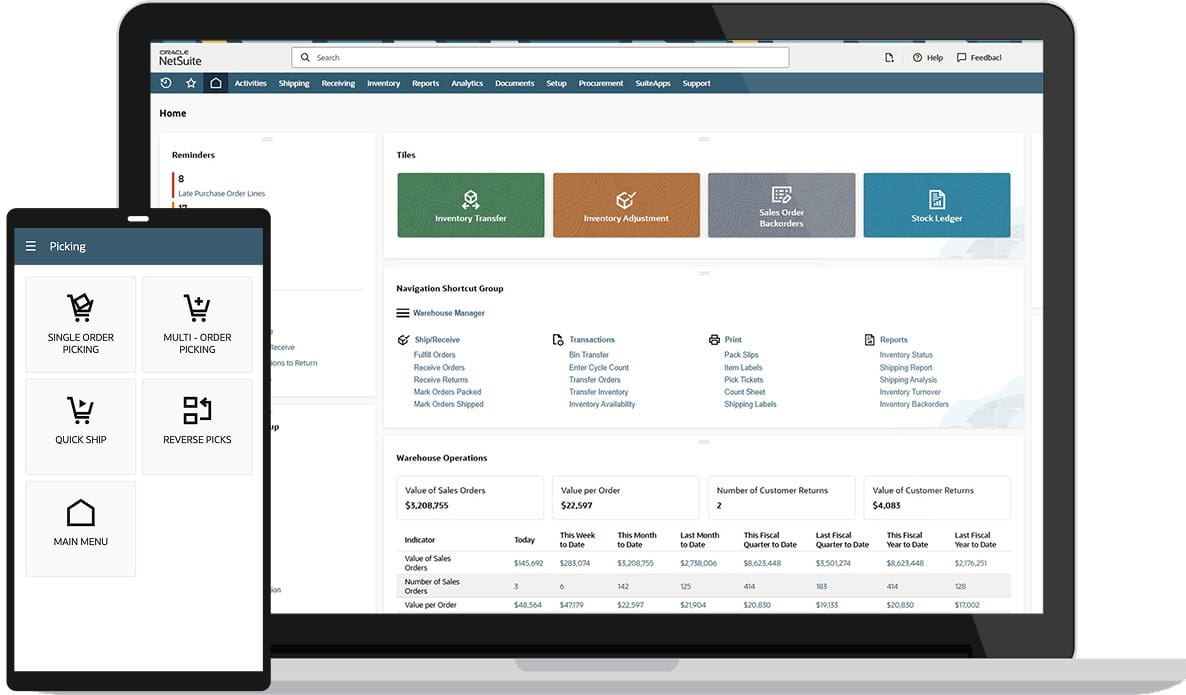
NetSuite: The Integrated Advantage
Centralized Operations:
- Single platform for orders, inventory, shipping, and accounting
- Real-time data synchronization across all functions
- Unified customer view from inquiry to delivery
- Automated workflow orchestration
Key Benefits:
Operational Efficiency
- 40-60% reduction in manual data entry
- Automated order routing and fulfillment workflows
- Real-time inventory management across multiple locations
- Integrated shipping with major carriers
Increasingly, modern businesses are discovering that parcel automation within NetSuite can eliminate the complexity of managing multiple shipping platforms. Moreover, it provides real-time visibility into every shipment.
Enhanced Visibility
- 360-degree dashboards showing KPIs in real-time
- Predictive analytics for demand forecasting
- Cost center tracking for precise profit analysis
- Customer lifecycle insights for better service
Customization Flexibility
- Workflow automation tailored to your processes
- Custom fields and forms for unique requirements
- Role-based permissions for security and efficiency
- API connectivity for specialized integrations
For instance, advanced features like dynamic packing optimize box selection and reduce DIM weight charges. In addition, freight automation handles complex multi-carton and palletized shipments seamlessly.
The ROI of Streamlined Multi-System Fulfillment
Quantifiable Benefits
| Metric | Improvement | Annual Value* |
|---|---|---|
| Order Processing Speed | 50-70% faster | $75,000-$150,000 |
| Error Reduction | 65-80% fewer mistakes | $25,000-$50,000 |
| Staff Productivity | 35-45% efficiency gain | $50,000-$100,000 |
| Inventory Accuracy | 90-98% precision | $30,000-$75,000 |
| Reporting Speed | 80-90% faster insights | $15,000-$30,000 |
*Based on businesses with $5M-$20M annual revenue
Strategic Advantages
✓Faster Time-to-Market: Launch new products 40% quicker
- ✓Improved Customer Satisfaction: 25-35% reduction in service tickets
- ✓Better Cash Flow: Real-time financial visibility improves decision-making
- ✓Scalability: Support 300-500% business growth without system overhaul
- ✓Compliance: Automated audit trails and regulatory reporting
Implementation Strategy: Escaping the Multi-System Fulfillment Trap
Phase 1: Assessment & Planning (Weeks 1-2)
Audit Current Systems:
- Map all existing tools and integrations
- Identify data flow bottlenecks
- Calculate current system costs (licenses, maintenance, labor)
- Document pain points and inefficiencies
ROI Analysis:
- Project implementation costs
- Estimate efficiency gains and cost savings
- Create timeline for payback period
- Define success metrics and KPIs
Phase 2: System Selection (Weeks 3-4)
Evaluation Criteria:
- Integration capabilities with existing tools
- Scalability for future growth
- Industry-specific functionality
- Vendor support and training resources
- Total cost of ownership
Phase 3: Migration & Integration (Weeks 5-12)
Best Practices:
- Parallel running during transition period
- Data validation at every migration step
- Staff training with hands-on workshops
- Gradual rollout by department or function
- Performance monitoring with regular check-ins
Phase 4: Optimization (Ongoing)
Continuous Improvement:
- Regular workflow analysis and refinement
- Advanced feature adoption as team expertise grows
- Performance benchmarking against industry standards
- Quarterly ROI assessments and optimization opportunities
Industry-Specific Considerations
E-commerce & Retail
- Multi-channel inventory synchronization
- Dynamic pricing and promotion management
- Customer segmentation and personalization
- Seasonal demand planning
Manufacturing & Distribution
- Bill of materials management
- Production scheduling integration
- Quality control workflows
- Supplier relationship management
3PL & Logistics
For third-party logistics providers in particular, unified fulfillment systems become even more critical. Specifically, they help manage multiple clients and complex routing requirements:
- Client-specific reporting and billing
- Multi-warehouse orchestration
- Carrier optimization algorithms
- Performance SLA tracking
Success Stories: Real-World Multi-System Fulfillment Transformations
“After consolidating our five separate systems into NetSuite, we reduced our fulfillment processing time by 65% and eliminated $45,000 in annual licensing costs. Our team can now focus on growth initiatives instead of data management.”
– Sarah Chen, Operations Director, TechGear Solutions
“The visibility we gained was game-changing. We went from guessing our inventory levels to having real-time accuracy across 12 locations. Our stockouts decreased by 80%.”
– Michael Rodriguez, Supply Chain Manager, Active Lifestyle Co.
Future-Proofing Your Multi-System Fulfillment Operations

Emerging Technologies Integration
AI & Machine Learning:
- Predictive demand forecasting
- Automated reorder point optimization
- Customer behavior analytics
- Dynamic pricing algorithms
LOT & Real-Time Tracking:
- RFID inventory management
- Temperature and condition monitoring
- Automated quality control
- Predictive maintenance alerts
Robotics & Automation:
- Automated picking and packing
- Drone inventory audits
- Autonomous material handling
- Robotic process automation (RPA)
Getting Started: Your Next Steps
Immediate Actions (This Week)
- Conduct a System Audit: List all current fulfillment tools and their costs
- Calculate Hidden Costs: Estimate time spent on manual processes
- Identify Pain Points: Survey your team about daily frustrations
- Research Solutions: Compare integrated platforms like NetSuite
30-Day Action Plan
- Week 1-2: Complete comprehensive cost-benefit analysis
- Week 3: Schedule demos with 2-3 integrated solution providers
- Week 4: Present findings to leadership with implementation roadmap
Resources for Success
Additional Reading:
- NetSuite Fulfillment Best Practices Guide
- Warehouse Automation ROI Calculator
- Supply Chain Integration Strategies
Free Assessment Tools:
- Multi-System Cost Calculator
- Fulfillment Efficiency Scorecard
- ROI Projection Worksheet
Conclusion: Transform Your Fulfillment, Transform Your Business
Ultimately, the hidden costs of multi-system fulfillment are not just operational inefficiencies—they’re barriers to growth, customer satisfaction, and competitive advantage. By consolidating your operations into a unified fulfillment platform built on NetSuite, you’re not just solving today’s problems; instead, you’re building the foundation for tomorrow’s success.
The question isn’t whether you can afford to implement an integrated solution—it’s whether you can afford not to.